


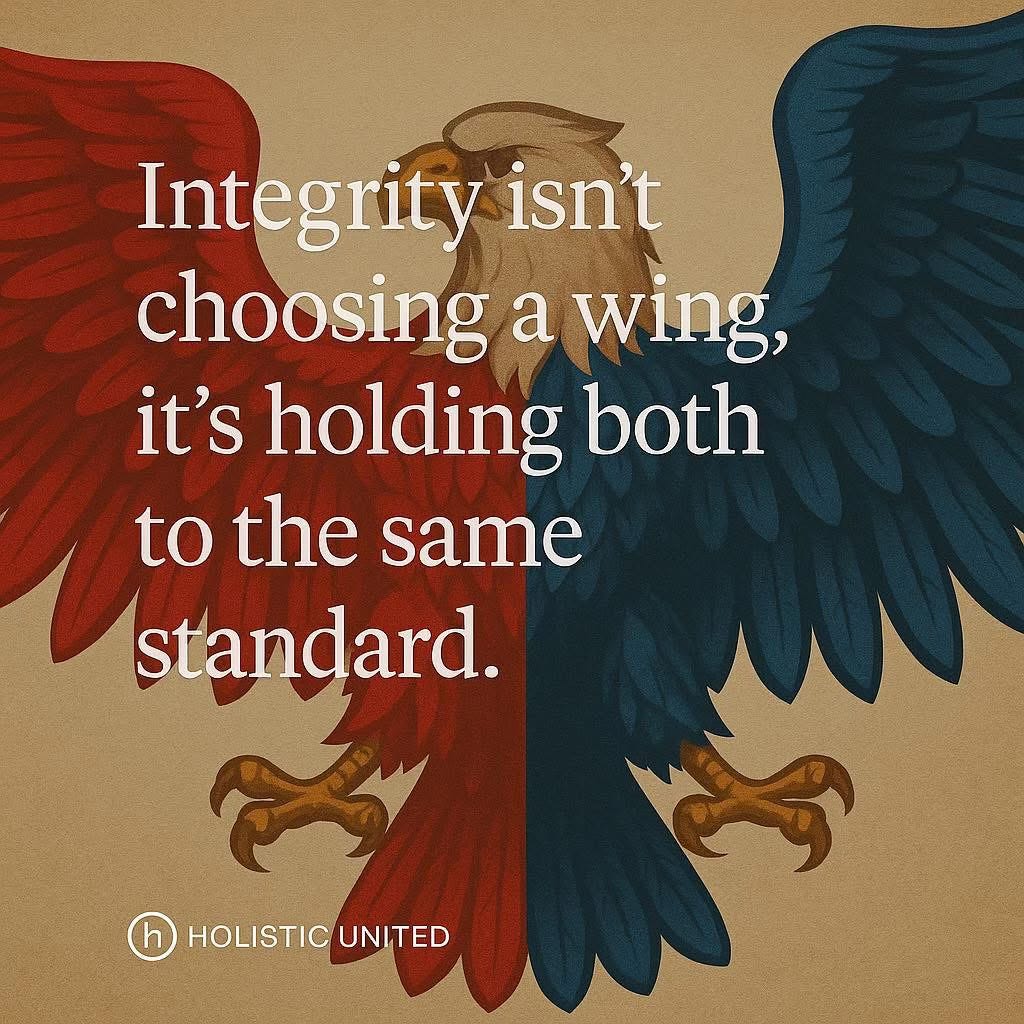
Every faction claims the moral high ground. The right claims the mantle of self-reliance, the left claims the mantle of compassion. Yet each wing trades on a kind of selective blindness. The right highlights self-reliance but often neglects those left behind, the left highlights compassion but often neglects the costs pushed onto others. Reducing it to selfishness versus selflessness is just tribal storytelling. The result is not clarity but caricature, tribal spin that flatters one side while demonizing the other.
Discernment breaks this cycle. It is not the defence of a tribe but the discipline of perceiving reality as it is, factually, contextually, and consciously. David R. Hawkins’ Map of Consciousness frames this well. Below the threshold of integrity, tribal allegiance eclipses truth: pride resists correction, anger thrives on outrage, fear clings to belonging. Above integrity, courage faces truth even when it is inconvenient, neutrality allows observation without attachment, willingness opens to growth, reason organizes knowledge, and love perceives the interconnectedness of all life. Discernment flows within this higher field, applying one standard without exception.
The tribal impulse thrives on double standards: “what about me” when burdened, “what about them” when others are. The right decries dependency yet tolerates corporate subsidies; the left decries exploitation yet tolerates policies that externalize costs. Both wings project selfishness onto the other while disguising it in themselves. Discernment reveals this inversion: the story is not virtue versus vice, but selective framing in service of tribal identity.
A healthier society will not emerge from doubling down on narratives of selfishness versus selflessness. It will emerge from the application of integrity: holding the same standard regardless of which side gains or loses. That is where accountability is born. That is where trust begins to rebuild.
Discernment makes this possible. It is not relativism, which flattens truth into “everyone has a point.” It is not cynicism, which declares all sides corrupt. It is the alignment of perception with reality, naming collapse when it appears, honouring integrity when it is present, and refusing to excuse in ourselves what we condemn in others.
The challenge is cultural but also existential. A civilization that abandons discernment becomes trapped in tribal spin, where outrage masquerades as truth and loyalty replaces integrity. A civilization that embraces discernment evolves beyond it, building institutions and relationships capable of trust because they rest on standards applied equally.
Thus, integrity is not found in choosing a wing but in transcending the frame itself. The moral high ground is not owned by left or right; it is owned by truth. And only discernment can keep us there.